16 - 21 August 2026 | Copenhagen | Application deadline: 28 June 2026
Working with biological solutions: From design to consumer acceptance
Agrifood systems have significant potential to contribute to climate action, biodiversity protection, resource efficiency and healthy diets within planetary boundaries. Unlocking this potential requires new biological solutions - also known as biosolutions - such as microorganisms, enzymes, and nature‑based processes. Biosolutions can improve primary production, reduce chemical inputs, create value from side-streams and support sustainable food innovation.
The biosolutions sector has immense potential to create jobs, accelerate the green transition, and drive innovation. START’s PhD Summer School offers a distinctive opportunity to work hands-on with the full development of a biosolution - from early design and production to regulation, commercialisation, and consumer acceptance. Participants gain rare insight into the entire value chain, and how sustainable agrifood solutions are developed in practice.
Read more about biosolution cases in agriculture here.
Content
The summer school will include lectures from specialists across the entire value chain from both academia, organisations and industry, 1-day excursion to state-of-the-art and pilot test facilities, working in cross-disciplinary groups on a case and presentation of the case challenge.
Topics such as the following will be covered:
Biosolutions in sustainable agrifood systems
Interdisciplinary collaboration in agrifood research
Design, production and processing phase of a new sustainable product
New Genomic Technologies (NGT)
Precision fermentation and downstream processing
Regulation, commercialization and consumer acceptance
Why this couse?
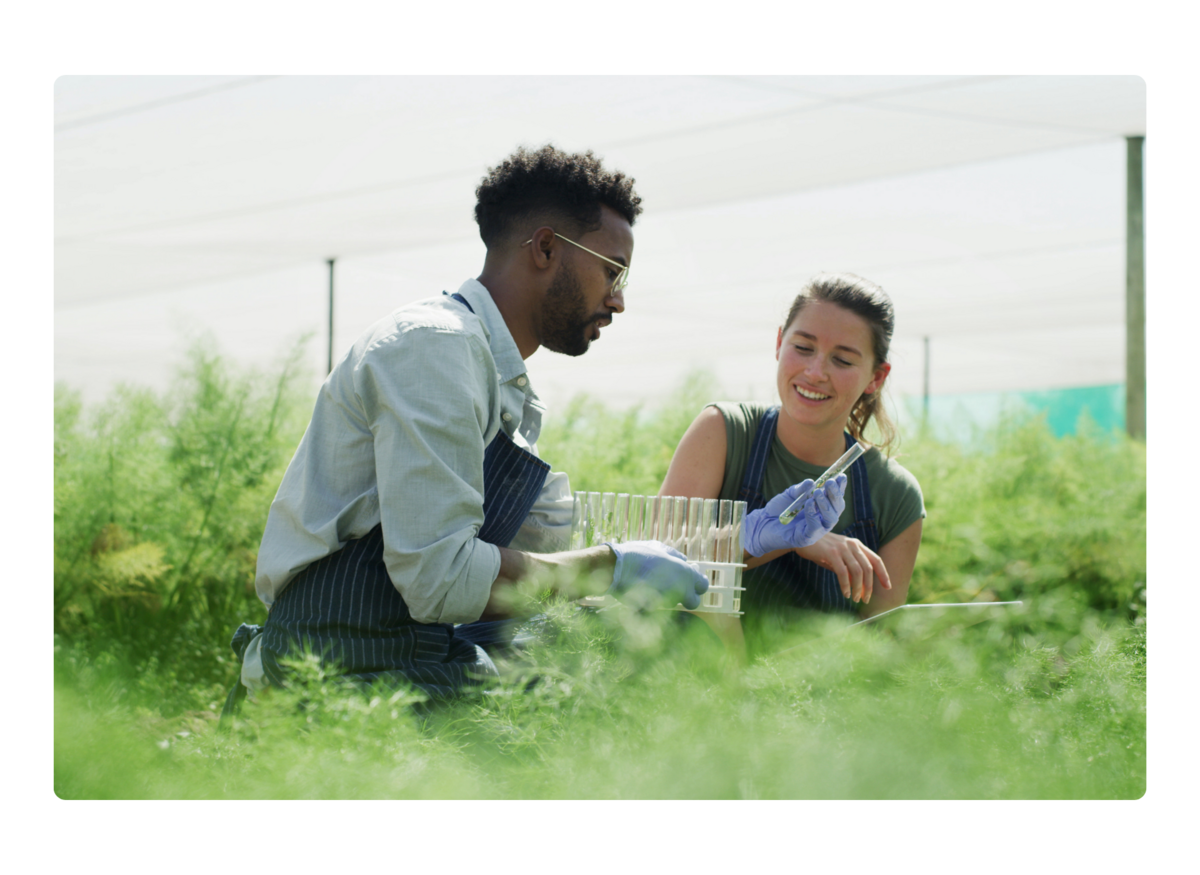
Experience the entire biosolutions pathway in practice
Through visits to state-of-the-art and pilot test facilities, participants gain insight into how biosolutions are tested and developed beyond the lab. This course offers an opportunity for PhD students to explore biosolutions as a possible future career path – and as a rapidly growing field within research.
Engage with experts across the value chain
Lectures and interactions with specialists from academia, industry, and organisations provide multiple perspectives on biosolution development.
Work interdisciplinarily in practice
Participants collaborate across scientific, regulatory, and societal perspectives—mirroring real-world development processes.
How to apply
To apply you need to submit an application. As part of your application, please submit a CV and a short motivation letter (maximum one page), answering:
- What are your expectations for the summer school?
- How does interdisciplinary work relate to your research?
- Briefly share your current research interests.
Participants are themselves responsible for visa applications (if applicable) and travel insurance. For visa requirements, visit New to Denmark.
You apply by submitting your application using the following link: https://eventsignup.ku.dk/startsummerschool

Are you ready to expand your practical knowledge about biosolutions? Read more about the course below
Target group and research area
Target group and research area
The summer school is aimed at PhD students working with research related to:
- Sustainable agrifood systems
- Agriculture and plant science
- Food science and biotechnology
- Circular bioeconomy and upcycling
- Consumer behavior, regulation and innovation
- Food culture
- Other related interdisciplinary fields
The Summer School aims to enroll 35 students across Danish and international universities.
Research area
Interdisciplinary sustainable agrifood systems. The course builds on a range of disciplines: natural science to describe the design, production and processing of agrifood products; consumer behavior and food marketing to describe how people perceive, choose, and accept food products; law and social science to describe regulatory and political options for novel foods.
Teaching and learning methods
Teaching and learning methods
The summer school uses research-based and challenge-driven learning. The programme includes:
- Lectures by researchers, industry experts and organisations
- Interdisciplinary discussions
- Case-based group work
- Facility visits related to production, processing and consumer research
- A full-day excursion to Danish agrifood biosolution and pilot-test facilities
- Final group presentations with feedback from lecturers and experts
Lecturers will include invited international speakers, researchers from the START network, and experts from industry and organisations.
Learning outcomes: Knowledge, skills and competences
Learning outcomes: Knowledge, skills and competences
Knowledge about:
Upon completing the course, the student will have gained knowledge of:
- The role of biosolutions in the sustainable transition of agrifood systems, including microorganisms, enzymes and nature-based processes
- Design, production, and processing of new sustainable food products across the value chain
- Basics of New Genomic Technologies (NGT)
- Regulatory frameworks and commercialization pathways for novel foods
- Consumer behavior and market acceptance of sustainable biosolutions
- Interdisciplinary approaches to complex challenges in agrifood systems
Skills:
Upon completing the course, the student will be able to:
- Formulate and analyze challenges and solutions related to the development and commercialization of sustainable novel foods
- Work effectively in interdisciplinary groups integrating perspectives from natural sciences, social sciences, law, and consumer science
- Critically evaluate biosolutions along the entire agrifood value chain – from primary production to consumer acceptance
- Communicate and present complex, interdisciplinary findings to a diverse academic and industry audience
Competences:
- Upon completion of the course, the students will have developed competencies to:
- Apply interdisciplinary thinking to identify and address real-world challenges in sustainable agrifood systems
- Navigate the intersection of science, regulation, industry, and consumer perspectives when developing biosolution-based products
- Contribute constructively to collaborative problem-solving processes in an international and interdisciplinary research environment
Type of assessment
Type of assessment
Active participation in all sessions, including discussion with teachers, preparation of the case and presentation of case solution, and participation in the 1-day excursion. Students who complete the course will receive a diploma.
Literature
Literature
A list of literature will be provided to the students at least 2 weeks before the course starts.
ECTS points
ECTS points
The course is expected to award 2.5 ECTS credits.
Participants are responsible for applying for the credits themselves. However, the course is structured to support and facilitate the application process.
Course fee
Course fee
The course is free of charge for PhD students. Accommodation, most meals (except dinner), and social activities are also included. If you are from a non-Danish university, you may apply for reimbursement of travel expenses up to DKK 5,000 (including VAT), approximately €670.
Selection policy
Selection policy
When the deadline has passed, the selection committee will carefully review all applications. Emphasis will be placed on diversity in expertise, background and motivations towards the programme of the summer school and within the agrifood research area.
Cancellation policy
Cancellation policy
Cancellations made up to two weeks before the course starts are free of charge.
- Cancellations made less than two weeks before the course starts will be charged a fee of DKK 3.000
- Participants with less than 80% attendance cannot pass the course and will be charged a fee of DKK 5.000
- No-show will result in a fee of DKK 5.000
- Participants who fail to hand in any mandatory exams or assignments cannot pass the course and will be charged a fee of DKK 5.000
Speakers
Meet our inspiring speakers

Claus Crone Fuglsang
Chief Scientific Officer, Executive Vice President at Novonesis

Amparo Jiménez-Quero
Assistant Professor, Chalmers University of Technology

Giovanni Sogari
Associate Professor, University of Parma
Programme committee
Serafim Bakalis
Professor, University of Copenhagen

Deyang Xu
Associate Professor, University of Copenhagen

Giuliano Marcelo Dragone
Associate Professor, University of Copenhagen

Marija Banovic
Associate Professor, Aarhus University